Pressure Plates
Pressure plate guide: selection, symptoms and replacement
How to choose and replace a heavy-duty clutch pressure plate, plus failure symptoms: 89 REVOL codes for Volvo, Mercedes-Benz, Renault Trucks, MAN and more.
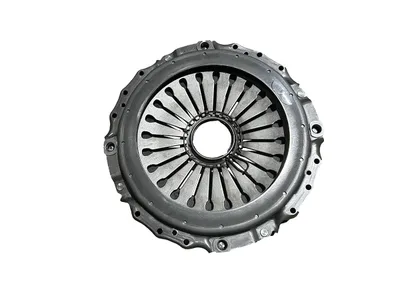
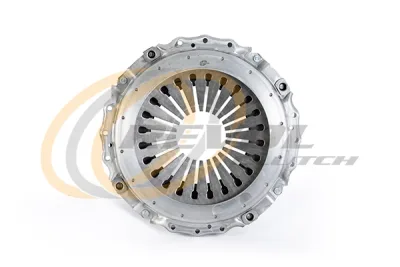
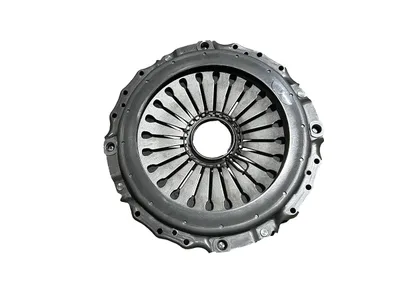
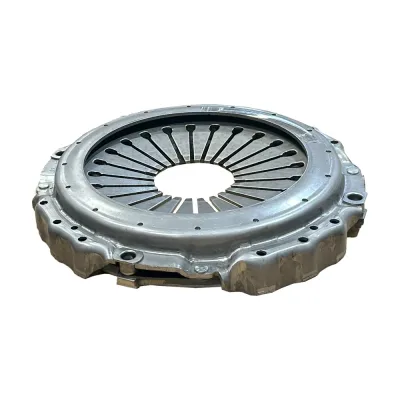
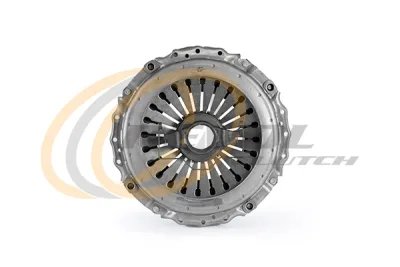
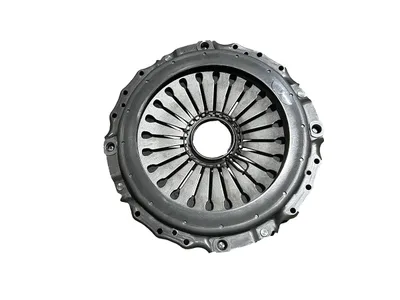
A pressure plate, also known as a clutch pressure plate or clutch cover, is the clutch component that is bolted to the flywheel and clamps the clutch disc against it so that engine torque is transmitted to the gearbox. Under the REVOL brand, Özteknik offers 89 pressure plate codes for trucks, tractor units and buses, led by Volvo, Mercedes-Benz, Renault Trucks, MAN, Iveco, Scania and DAF. All codes are listed in the Pressure Plates catalogue.
What is a pressure plate and what does it do?
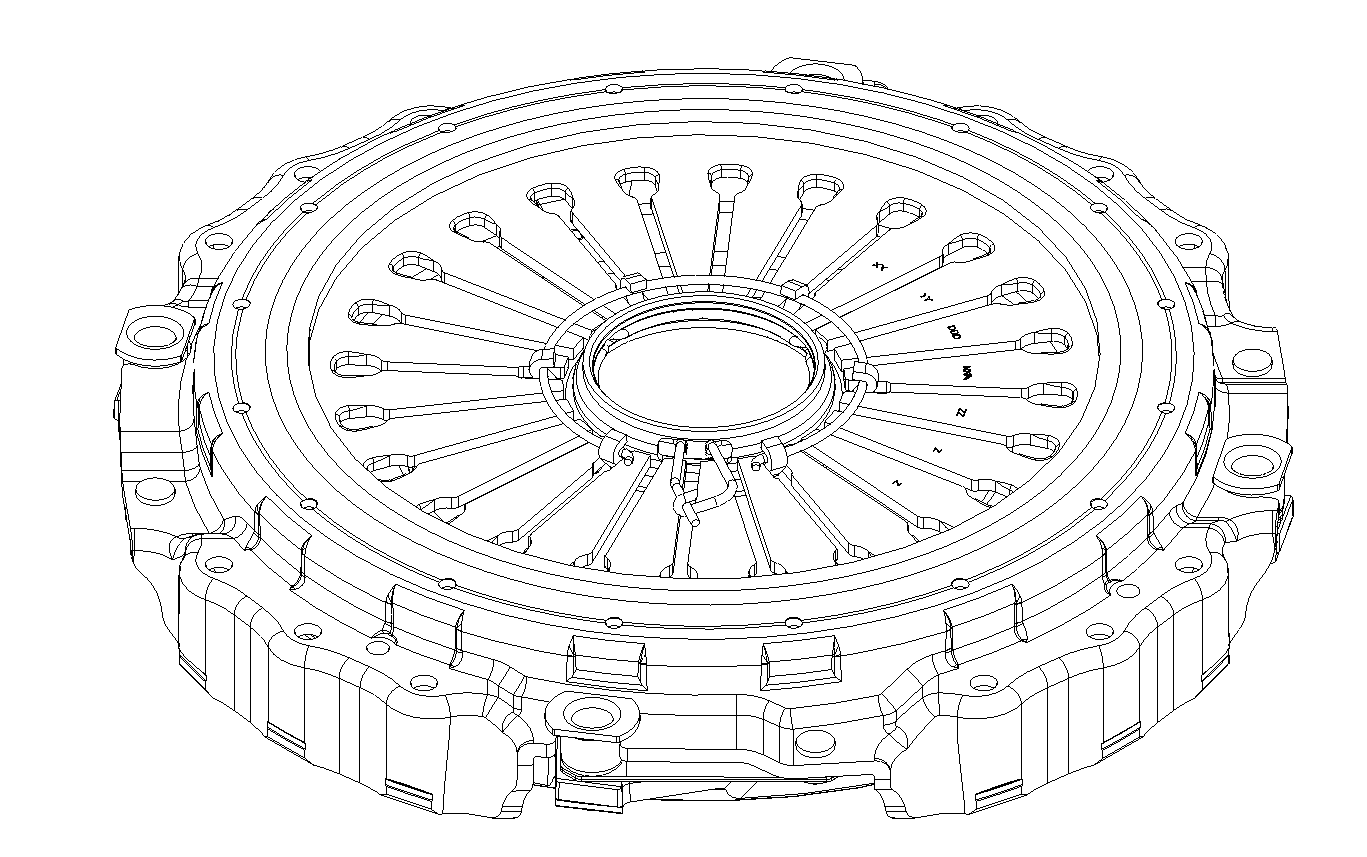
The pressure plate works inside the bell housing between the flywheel and the clutch disc and consists of the following main elements:
- Cover (housing): Bolted to the flywheel; it carries and centres the whole assembly.
- Diaphragm spring: Applies a constant force to the pressure ring, clamping the disc against the flywheel.
- Pressure ring: The cast friction face in contact with the disc; it absorbs the heat generated when moving off and manoeuvring.
- Strap springs: Connect the pressure ring to the cover and lift it away from the disc when the clutch is released.
When the clutch pedal is pressed or the actuator of an automated manual transmission (AMT) operates, the release bearing acts on the diaphragm spring fingers. The spring force is removed from the pressure ring, the disc is freed and torque transmission is interrupted. On heavy vehicles this design is either push-type or pull-type, depending on the vehicle: with a push-type clutch the bearing pushes the fingers towards the flywheel, with a pull-type clutch it pulls them towards the gearbox.
How to choose the right pressure plate
The most reliable way to find the right pressure plate is the OE number. Use the number on the removed part or in the vehicle's parts catalogue to search by OE number. Sample OE references:
- Mercedes-Benz A 010 250 37 04
- MAN 81.30305-0238 and 81.30305-9238
- DAF 1671412
- Renault Trucks 5010545582
Cross-reference numbers of brands such as Sachs can also be searched. If no OE number is available, match the following together:
- Vehicle make, model and engine: For example, applications for the Volvo FH16 and the Ford Trucks F-MAX and Cargo are listed in the catalogue.
- Diameter: The pressure plate diameter must suit the flywheel and the disc used.
- Release type: Push-type and pull-type pressure plates are not interchangeable; the new part must be the same type as the one removed.
- Matching disc and bearing: The pressure plate must match the disc and bearing of the same system and suit a single- or twin-plate design.
- Gearbox type: The release system may differ between manual and AMT applications.
| Dimension | Typical range |
|---|---|
| Pressure plate diameter | 395–430 mm |
| Most common diameter | 430 mm |
| Release type | Push or pull; must match the removed part |
The diameter range in the table covers most REVOL pressure plates. Always confirm the diameter and release type against the removed part before ordering.
Failure symptoms
- Slipping: Besides disc wear, a weakened diaphragm spring can no longer clamp the disc sufficiently; under load the engine speed rises but the vehicle does not accelerate.
- Judder when moving off: Heat cracks on the friction face, distortion or uneven finger height cause shudder.
- Incomplete release (drag): A distorted pressure ring, broken or worn diaphragm fingers or damaged strap springs make gears hard to engage.
- Change in pedal effort: The pedal becomes heavy or uneven, or the bite point shifts.
- Noise: Clicking or squealing when the clutch is pressed may indicate worn finger tips or bearing contact problems.
- Signs of overheating: Blue discoloration and dense heat cracks on the friction face when the clutch is removed.
- Warning messages: On AMT vehicles, clutch wear or overheating warnings and fault codes appear.
Inspection and replacement
The pressure plate can only be inspected directly once the gearbox has been removed. During removal, check:
- Friction face: Heat cracks, blue discoloration, deep scoring and lack of flatness; assess flatness with a straight edge and feeler gauge against the manufacturer's limits.
- Diaphragm spring fingers: Wear at the bearing contact area, breakage or uneven height.
- Strap springs and rivets: Bending, cracks and looseness.
- Cover: Damage to the bolt holes and dowel pins.
- Surrounding parts: Flywheel face, rear crankshaft seal, gearbox input shaft and release bearing.
A pressure plate is not dismantled or repaired in the workshop; if it is worn or damaged, it is replaced as a complete unit. When replacing the pressure plate it is recommended to renew the disc and bearing as well; REVOL also offers these parts as a clutch kit. Locate the pressure plate on the dowel pins, centre the disc with an alignment tool and keep friction surfaces free of oil and grease. Tighten the bolts crosswise in stages; apply the tightening torque and procedure given in the vehicle manufacturer's service manual. Depending on the system, the pedal free play must be adjusted and the hydraulic circuit bled after fitting; on AMT vehicles the clutch learning (calibration) procedure must be completed with a diagnostic tool.
Safety: Heavy-vehicle pressure plates are heavy and directly affect the driveline. Replacement must be carried out by qualified personnel using suitable lifting equipment for the gearbox and pressure plate, with the vehicle secured against rolling.
Production and testing at Özteknik
Özteknik has manufactured heavy-vehicle spare parts in Kemalpaşa, İzmir (Türkiye) since 1971; its REVOL brand has covered clutch products since 2013. In-house processes include machining, heat treatment, surface preparation, assembly, painting and testing (Production & R&D). REVOL test equipment relevant to pressure plates includes:
- Diaphragm spring fatigue testing machine
- Diaphragm spring load testing machine
- Clutch cover assembly comprehensive testing machine
- Coil spring, cushion spring & disc spring load testing device
REVOL pressure plates are made to OE quality under a quality management system certified to IATF 16949:2016 and ISO 9001:2015; see the Quality & Certificates page.
Vehicles covered
REVOL pressure plates are mainly intended for Volvo, Mercedes-Benz, Renault Trucks, MAN, Iveco, Scania, DAF and Ford Trucks vehicles. The catalogue also contains codes for Leyland and for Kässbohrer (Setra), Van Hool and Neoplan buses. Volvo, Mercedes-Benz and Renault Trucks have the most codes. Sample products:
Select the codes you need on the Pressure Plates page and add them to your quote list, or reach us via the contact page. OE numbers and brand names are given for comparison purposes only.
Frequently asked questions
How do I find a pressure plate by OE number?
Enter the OE number from the removed pressure plate or from the vehicle's parts catalogue in the site search; matching REVOL pressure plate codes are listed. Cross-reference numbers of brands such as Sachs can also be searched.
Can the pressure plate be replaced on its own?
It is technically possible, but because the pressure plate, disc and bearing work and wear together, renewing all three while the gearbox is out is recommended. For this reason REVOL also offers complete clutch kits alongside pressure plates.
Can a pressure plate be repaired?
No. A pressure plate is an assembly in which the diaphragm spring, pressure ring and strap springs are riveted and set together. A worn or damaged pressure plate must be replaced as a complete unit.
What is the difference between push-type and pull-type pressure plates?
In a push-type clutch the release bearing disengages the clutch by pushing the diaphragm spring fingers towards the flywheel; in a pull-type clutch it pulls them towards the gearbox. The two types are not interchangeable, so the new pressure plate must be the same type as the one removed.
Which diameters do REVOL pressure plates come in?
The typical diameter range of REVOL pressure plates is 395–430 mm, and the most common diameter is 430 mm. Confirm the diameter and release type against the removed part before ordering.
Also available in: العربية, Deutsch, Español, Français, Italiano, Русский, Türkçe