Steering Cylinders
Steering cylinder guide: selection, failure signs, replacement
How to choose a truck steering cylinder and spot failures: 38 HYDCAB codes for MAN, Mercedes-Benz, Scania, Volvo, Iveco and more.
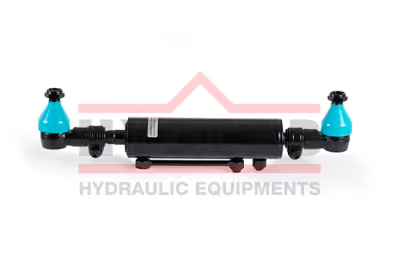
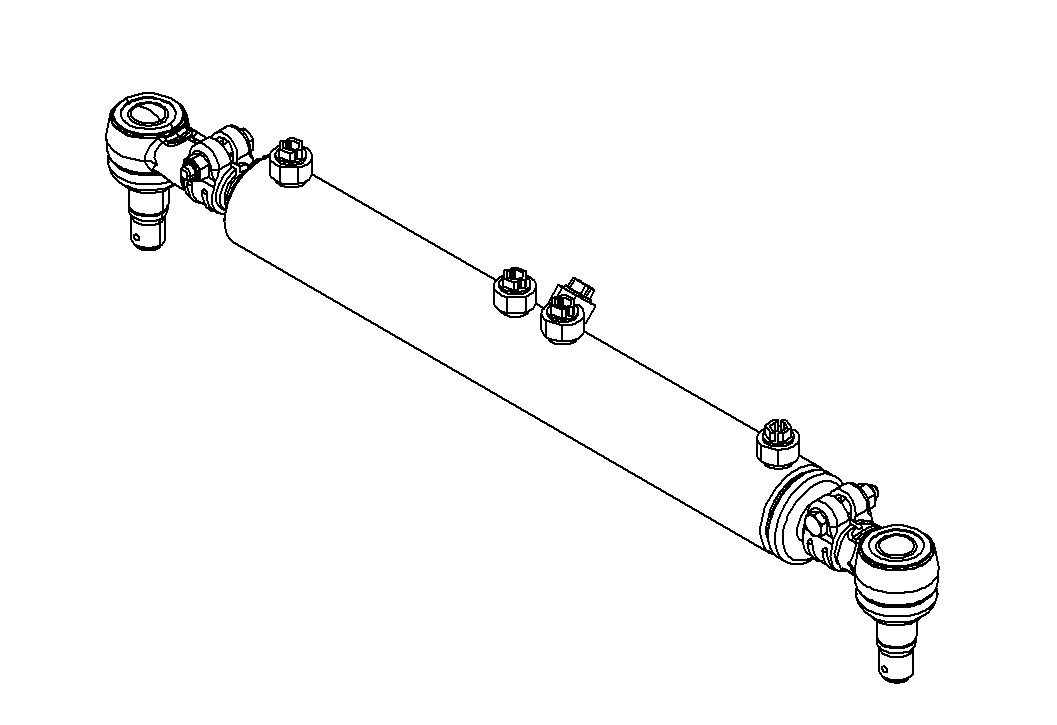
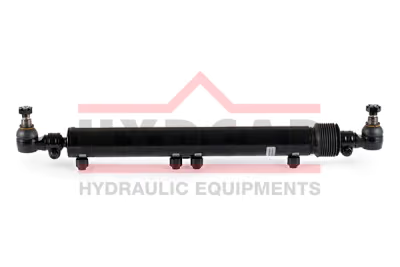
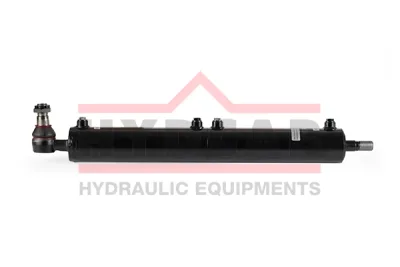
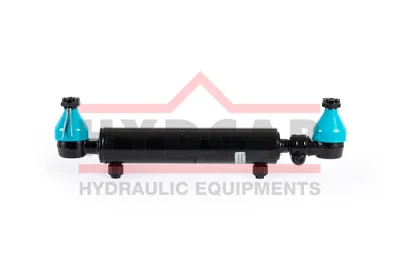
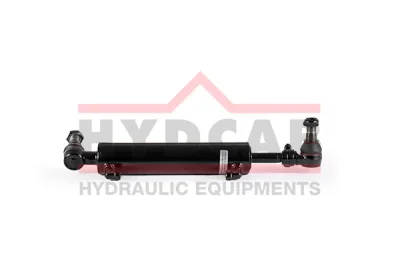
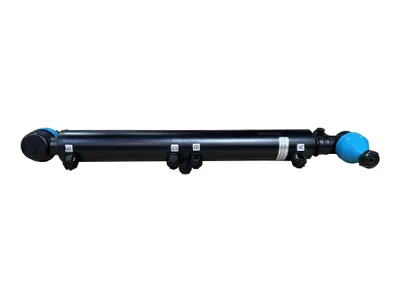
A steering cylinder, also known as a power steering cylinder, is a double-acting hydraulic cylinder that transfers the hydraulic assistance of the steering gear to the axle side of a heavy vehicle. Under its HYDCAB brand, Özteknik offers 38 product codes in this category, covering MAN, Mercedes-Benz, Scania, Volvo, Iveco, Renault Trucks, Ford and DAF vehicles. All codes are listed in the steering cylinders catalogue.
What is a steering cylinder and what does it do?
On trucks, tractor units and buses, steering usually works through a hydraulically assisted steering gear. On vehicles with high front axle loads, and especially on trucks with two steered front axles, the force produced by the steering gear alone may not be sufficient, or it has to be transmitted to the second axle as well. This is where the steering cylinder comes in: one end is attached to the chassis or the axle beam, the other to the steering linkage, and when the wheel is turned it pushes or pulls in the same direction.
Inside the cylinder there is a piston with a piston rod. Oil reaches the hydraulic ports on either side of the piston, usually directed by the control valve of the steering gear. When the steering is turned one way, one side of the piston is pressurised while oil from the other side flows to the return line; in the opposite direction the roles are reversed. The cylinder therefore adds force to the steering movement, but the direction and amount of movement are always set by the steering gear. Piston and rod seals keep the system tight, and the rod wiper protects the inside of the cylinder from dirt and water.
How to choose the right steering cylinder
In this category, selection is based on the OE number and vehicle data rather than a dimension table. Follow this order:
- OE number: The most reliable source is the number on the old cylinder or in the vehicle manufacturer's parts catalogue. Example OE numbers: MAN 81.47501-6052, 81.47501-6072 and 81.47501-6073; Mercedes-Benz A 000 466 34 92 (written as 4663492 in some lists); DAF 1738803. Enter the number in the OE number search to see the matching HYDCAB code.
- Vehicle make, model and axle configuration: Different models and axle configurations of the same make can use different cylinders. Checking against the chassis number (VIN) is the safest way.
- Mounting position: Note which axle and which side of the vehicle the cylinder is fitted to.
- Connection type: The end fittings (ball joint end or bushed eye) and the position, orientation and thread type of the hydraulic ports must match the old part.
- Stroke and length: Retracted length and stroke are vehicle-specific; if in doubt, measure the old part.
| What to check | Where to confirm it |
|---|---|
| OE number | Label on the old part, vehicle manufacturer's parts catalogue |
| Vehicle and axle configuration | Registration documents and chassis number (VIN) |
| End fittings | Side-by-side comparison with the old part |
| Hydraulic ports | Port position, orientation and thread type |
| Stroke and retracted length | Measurement of the old part |
Confirm the dimensions and connection type against the old part before ordering; if you are unsure, send us photos of the old part together with its OE number.
Failure symptoms
- Steering becomes heavy, especially at low speed and when manoeuvring.
- Steering effort differs between left and right turns, or the steering feels uneven and notchy.
- Oil leaks at the piston rod or the ports; oily dirt builds up on the cylinder body.
- Scratches, dents or rust on the piston rod, which quickly damage the seals.
- The rod wiper is torn or displaced, and mud accumulates on the rod.
- Play in the end fittings, with clicking or knocking noises when steering.
- The hydraulic oil level drops repeatedly, the oil foams and the pump whines, which points to air in the system.
Inspection and replacement
Inspection steps:
- With the engine off, check the piston rod, rod wiper and ports for leaks and damage.
- Check the end fittings for play and the mounting brackets for security.
- Inspect hoses and pipes for cracks, chafing and loose connections; check the oil level and colour.
- With the engine running, have an assistant turn the steering from side to side while you watch from a safe position that the cylinder moves smoothly.
Points to note when replacing:
- Leaks usually come from the seals, but if the piston rod is scored or rusted, new seals alone will not last; replace the complete cylinder.
- Check the hoses and fittings you remove as well, and cap open ports so that no dirt enters the system.
- If the oil is contaminated or the old cylinder shows metal wear, renew the oil and filter according to the vehicle manufacturer's instructions.
- Tighten all connections to the torque and procedure given in the vehicle manufacturer's service manual.
- After fitting, bleed the system according to the manufacturer's procedure and check the oil level again.
- Check at full left and full right lock that the cylinder does not touch anything; if the steering linkage was disturbed, have the wheel alignment checked.
Safety: The steering cylinder directly affects driving safety and must be fitted by qualified personnel. Stop the engine and release system pressure before opening any hydraulic line. Work under the vehicle only when it is chocked and secured on suitable stands.
Production and testing at Özteknik
HYDCAB cylinders are manufactured to OE quality by Özteknik in Kemalpaşa, İzmir. Tube forming for the cylinder body, machining of the piston rod and end caps, welding, heat treatment, surface preparation, assembly, painting and testing are all carried out in-house. More details are on the Production and R&D page.
The test programme of the HYDCAB hydraulic line includes the following tests, which are directly relevant to steering cylinders:
- SAE J1336 – Hydraulic cylinder leakage test
- SAE J1334 – Hydraulic cylinder integrity test
- SAE J1374 – Hydraulic cylinder rod seal endurance test procedure
- SAE J1335 – Hydraulic cylinder no-load friction test
- ISO 10100 – Hydraulic fluid power – Cylinders – Acceptance tests
- Corrosion test
Özteknik's quality management system is certified to IATF 16949:2016 and ISO 9001:2015; you can view the certificates on the quality and certificates page.
Vehicles covered
HYDCAB steering cylinders cover MAN, Mercedes-Benz, Scania, Volvo, Iveco, Renault Trucks, Ford and DAF vehicles. MAN has the most codes, followed by Mercedes-Benz and Scania. Example products: KS0072, KS0079, KS0162 and KS0169. Each product page lists the OE numbers and compatible vehicle makes for that code; for the full range, see the category page.
You can add the codes you need to your quote list or send us the OE numbers via the contact page. OE numbers and brand names are given for comparison purposes only.
Frequently asked questions
How do I find a steering cylinder by OE number?
Enter the OE number from the old cylinder or from the vehicle manufacturer's parts catalogue in the site search; the matching HYDCAB code is listed. For example, you can search for MAN 81.47501-6052 or Mercedes-Benz A 000 466 34 92.
What happens when a steering cylinder fails?
Steering becomes heavy, especially at low speed, oil leaks appear on the cylinder and the end fittings may knock. Because a leak lowers the oil level and can let the pump draw in air, the cylinder should be checked without delay.
Is replacing only the seals enough on a leaking cylinder?
If the piston rod is free of scores and rust, resealing may be possible; if the rod is damaged, new seals will soon leak again. In that case the complete cylinder should be replaced.
Does the system need bleeding after replacement?
Yes. Opening a hydraulic line lets air into the system, so it must be bled according to the vehicle manufacturer's procedure and the oil level checked again.
Which vehicles do HYDCAB steering cylinders fit?
The catalogue contains 38 codes covering MAN, Mercedes-Benz, Scania, Volvo, Iveco, Renault Trucks, Ford and DAF vehicles. Fitment should always be confirmed by OE number.
Also available in: العربية, Deutsch, Español, Français, Italiano, Русский, Türkçe