Clutch Discs
Clutch disc guide: selection, failure symptoms and replacement
REVOL clutch disc guide: 122 codes for Mercedes-Benz, MAN, Volvo, DAF and more, 395–430 mm diameter range, selection tips and failure symptoms.
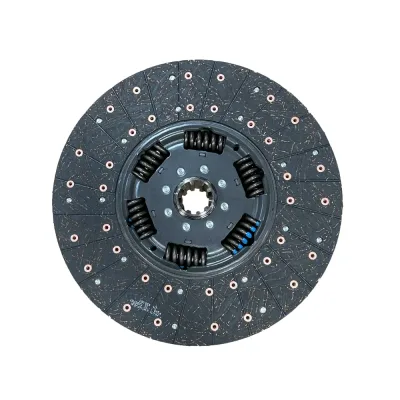
A clutch disc is the friction element clamped between the engine flywheel and the pressure plate; it transmits engine torque to the gearbox input shaft and is the part of a truck, tractor or bus clutch that wears the most. Under the REVOL brand, Özteknik offers 122 clutch disc codes for heavy-duty vehicles, led by Mercedes-Benz, MAN, Volvo, DAF, Iveco and Renault Trucks. All codes are listed in the Clutch Discs catalogue.
What is a clutch disc and what does it do?
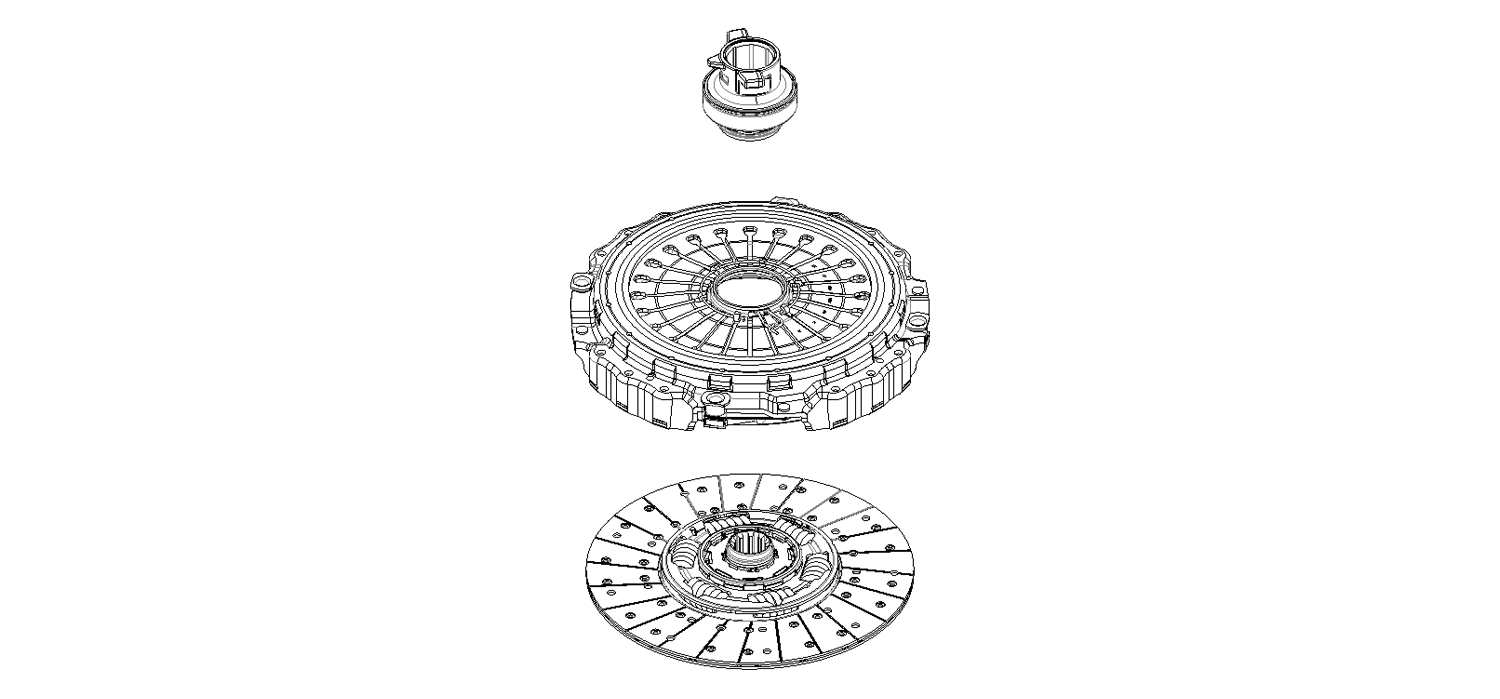
On heavy-duty vehicles the clutch is a dry system made up of the flywheel, the clutch disc, the pressure plate (clutch cover) and the release bearing. With the pedal released, the diaphragm spring of the pressure plate clamps the disc against the flywheel and engine torque passes to the gearbox through friction. When the pedal is pressed, the release bearing moves the diaphragm spring, the clamping force is lifted and the disc runs free, disconnecting the engine from the gearbox.
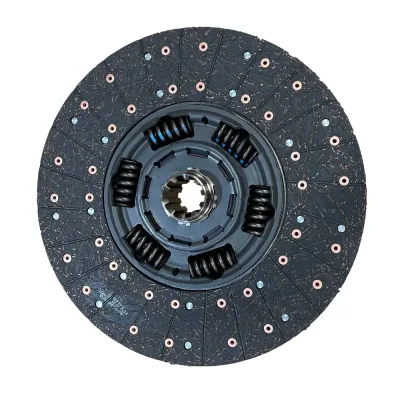
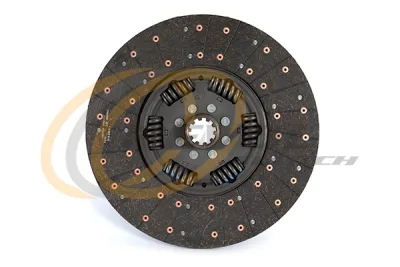
A clutch disc has four main elements:
- Friction linings: The linings on both faces carry the torque; their wear allowance determines the service life of the disc.
- Carrier plate and cushion springs: They hold the linings and make engagement progressive and smooth.
- Damper (coil) springs and friction rings: They absorb the torsional vibrations caused by engine irregularity and protect the gearbox and driveline.
- Splined hub: It connects the disc to the gearbox input shaft; the disc must be able to slide axially on the shaft.
How to choose the right clutch disc
Even within one vehicle model, different discs may be fitted depending on engine output, gearbox type and production period. We therefore recommend selecting in this order:
- OE number: The most reliable method. Sample OE numbers: Mercedes-Benz A 024 250 72 03, Volvo 1668537, Volvo 1668672, Scania 1479575, Scania 1499769, Renault Trucks 7420707025. Enter the number on the search page to find the matching REVOL code; cross-reference numbers of brands such as Sachs can also be searched.
- Vehicle make and model: For example MAN TGS (Euro 6) and TGX, Volvo FH16 (Euro 6), DAF XF 480 (Euro 6), Ford Trucks F-MAX and Cargo (Euro 6).
- Dimensions: Outside diameter of the disc and hub spline profile.
- Matching pressure plate: The disc works together with a pressure plate of the same diameter class; check the two as a pair.
| Dimension | Typical range |
|---|---|
| Disc outside diameter | 395–430 mm |
| Hub spline profile | Depends on the gearbox input shaft; specific to each code |
Most codes with diameter data fall between 395 and 430 mm, and 430 mm is the most common size. The number and profile of the hub splines depend on the gearbox input shaft, so the spline fit should be confirmed through the OE number, not by measurement alone.
Confirm the dimensions: Before ordering, compare the OE number, the diameter and the hub splines of the removed disc with the new part. Even with the same diameter, the hub profile or damper design may differ.
Failure symptoms
- Clutch slip: Under load or on a gradient the engine speed rises but the vehicle does not accelerate; the linings may be worn or contaminated with oil.
- Judder on take-off: The vehicle shudders while the clutch engages; possible causes are glazed or oily linings or a damaged flywheel or pressure plate face.
- Incomplete release: Gears are hard to engage or crunch; the hub may be sticking on the shaft or the disc may be distorted.
- Burnt lining smell: The linings have overheated from excessive slipping or overload.
- Rattle or knocking: Heard at idle or during engagement; it may indicate broken or loose damper springs or worn hub splines.
- Clear change in the engagement point: If the biting point shifts noticeably over time, inspect the disc and the pressure plate together.
Inspection and replacement
Because the disc can only be seen once the gearbox is removed, diagnosis relies on driving symptoms and on inspection during removal. With the clutch out, check the following:
- Inspect the linings for oil contamination, glazing (a hard, shiny surface), cracks and burn marks, and check whether the rivet heads are close to the surface.
- Check the damper springs for breakage, looseness and wear in their windows.
- Inspect the hub splines and the gearbox input shaft for wear, burrs and corrosion.
- Assess the friction faces of the flywheel and pressure plate for scoring, heat cracks and distortion.
- If there is oil on the linings, find and fix the source (rear crankshaft seal or gearbox input shaft seal) before fitting a new disc.
The disc, the pressure plate and the release bearing work and wear together. We therefore recommend renewing the pressure plate and the bearing whenever the disc is replaced; replacing a single part can lead to a second gearbox removal soon afterwards.
During fitting, observe the installation direction (follow the marking on the disc), centre the disc with an alignment tool and apply only a very thin film of the grease recommended by the vehicle manufacturer to the hub splines. Tighten the pressure plate bolts gradually in a crosswise sequence; the tightening torque and procedure given in the vehicle manufacturer's service manual must be followed. After fitting, adjust the clutch actuation, including bleeding where required, according to the manufacturer's instructions and check it on a test drive.
Safety: Clutch parts must be fitted by qualified personnel. Do not start removal until the vehicle is securely supported and the gearbox is carried on a suitable transmission jack. Do not blow off lining dust with compressed air.
Production and testing at Özteknik
REVOL is Özteknik's clutch brand, established in 2013. Özteknik has been manufacturing in Kemalpaşa, İzmir since 1971 and keeps machining, heat treatment, surface preparation, assembly and testing in-house (production and R&D). REVOL discs are produced to OE quality and verified on the company's clutch test equipment. Key tests for clutch discs:
- Clutch disc assembly hysteresis testing machine: damping characteristic of the damper unit
- Clutch disc assembly drag testing machine: complete release of the disc
- Coil spring life testing machine: endurance of the damper springs
- Coil spring, cushion spring & disc spring load testing device: verification of spring forces
- Clutch cover assembly comprehensive testing machine: checks on the pressure plate the disc works with
Özteknik's quality management system is certified to IATF 16949:2016 and ISO 9001:2015; the certificates are available on the quality and certificates page.
Vehicles covered
REVOL clutch discs cover trucks, tractors and buses led by Mercedes-Benz, MAN, Volvo, DAF, Iveco, Renault Trucks, Neoplan and EvoBus; Mercedes-Benz vehicles account for the most codes. Sample products: CD8 004 832, CD8 085 741, CD8 054 951. For all other codes, see the clutch discs catalogue.
You can add the codes you need to your quote list or reach us via the contact page. OE numbers and brand names are given for comparison purposes only.
Frequently asked questions
How do I find a clutch disc by OE number?
Enter the vehicle manufacturer's part number on the ozteknikoto.com search page and the matching REVOL code is listed. Cross-reference numbers of brands such as Sachs can also be searched.
What diameters do heavy-duty clutch discs come in?
Most REVOL codes with diameter data fall between 395 and 430 mm, and 430 mm is the most common size. Always confirm the diameter with the OE number and the removed part.
Should the pressure plate and release bearing be replaced with the disc?
Yes, this is recommended. The disc, pressure plate and release bearing work and wear together, and replacing only the disc can lead to a second gearbox removal soon afterwards.
When should a clutch disc be replaced?
The decision is based on findings rather than a fixed mileage. Slip under load, judder on take-off, a burnt smell, or oily, worn or cracked linings found on removal all call for replacement.
Why does the hub spline fit matter?
The disc hub slides onto the gearbox input shaft via its splines. If the profile does not match, the disc cannot be fitted or will not slide freely and the clutch will not release fully, so confirm the spline fit through the OE number.
Also available in: العربية, Deutsch, Español, Français, Italiano, Русский, Türkçe