Rod Ends
Rod end guide: selection, failure signs and replacement
Heavy-duty rod end selection, failure signs and replacement: 350 EGEROT codes for Mercedes-Benz, Volvo, MAN and DAF, thread and taper sizes, OE matching.
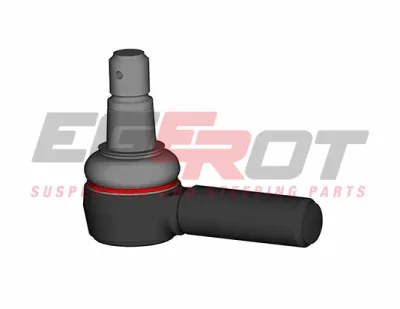
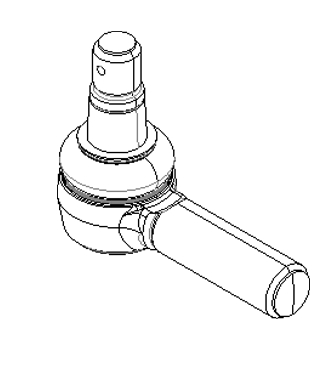
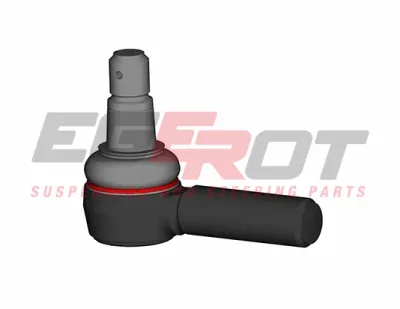
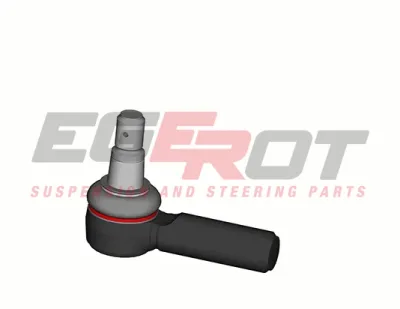
A rod end is the ball joint at the end of a steering rod that connects the rod to the steering arm on the axle by means of a tapered pin; it transmits the steering motion to the wheel while allowing for suspension travel and wheel rotation. Under the EGEROT brand, Özteknik offers 350 rod end codes for trucks, tractor units and buses, led by Mercedes-Benz, Volvo, MAN, DAF, Renault Trucks, Iveco and Scania. All codes are listed in the rod end catalogue.
What is a rod end and what does it do?
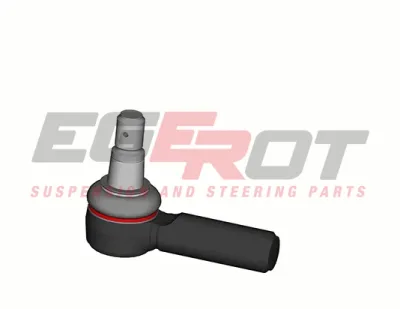
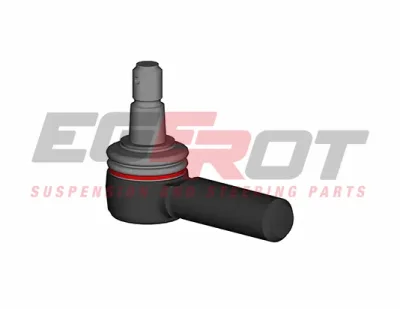
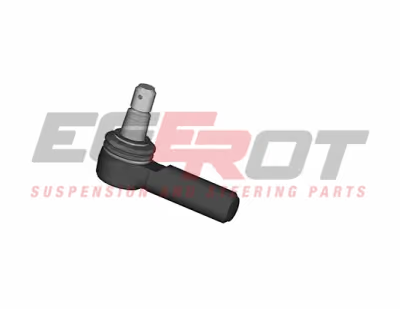
A rod end consists of a housing, a ball-headed pin (ball stud) inside the housing, bearing elements that let the pin rotate and swivel, and a dust boot that protects the joint from dirt and water. The tapered end of the pin sits in a tapered seat in the steering arm and is secured with a nut; the other side of the housing is threaded onto the rod and is usually locked with a clamp or lock nut.
On heavy vehicles, rod ends, also known as tie rod ends, are used at the ends of the tie rod that links the two front wheels and of the drag link that carries the motion from the steering gear. Adjustable tie rods have a right-hand threaded rod end at one end and a left-hand threaded one at the other; turning the tube changes the length of the rod and therefore the toe setting of the wheels. This is why right-hand and left-hand rod ends are separate codes.
A rod end carries load with every steering movement and every road shock. The joint must run free of play and with even friction: play reduces steering precision, while a seized, corroded joint makes the steering heavy and strains the connecting parts.
Besides threaded rod ends, the EGEROT rod end category also includes joint types whose housing is fitted into the arm and whose pin is bolted on through a flange with two holes. These types are used on axle linkage arms (for example at the ends of torque rods or V-stays) and are defined by outer diameter, hole centre distance, hole diameter and thickness.
How to choose a rod end
The most reliable route is the OE number. Enter the vehicle manufacturer's part number in the site search to find the matching EGEROT code. Sample OE numbers: MAN 81.95301-0016, MAN 81.43220-6108, MAN 81.43220-6132, MAN 81.43230-6043, Mercedes-Benz A 343 586 00 32 and 3504405.
If you do not have the OE number, matching is done with the following information:
- Vehicle make and model: e.g. Volvo FH16, Scania 4 series and P series, MAN TGA, TGS and TGX, Mercedes-Benz O 309 and T2, Setra and Van Hool buses.
- Thread size and direction: thread diameter, pitch and right-hand or left-hand thread.
- Taper size: the diameters of the tapered part of the pin that sits in the steering arm.
- Length: overall length of the rod end.
- For flanged joint types: outer diameter, hole centre distance (between the centres of the two bolt holes), hole diameter and thickness.
Most rod ends in the catalogue fall within these ranges:
| Dimension | Typical range |
|---|---|
| Thread size | M24 – M44 |
| Taper diameter (small end) | 18 – 28.9 mm |
| Length | 88 – 190 mm |
| Outer diameter (flanged joint) | 67 – 95 mm |
| Hole centre distance (flanged joint) | 100 – 152 mm |
| Hole diameter (flanged joint) | 17 – 25 mm |
| Thickness (flanged joint) | 24 – 30 mm |
Special codes outside these ranges also exist. Confirm the dimensions: before ordering, compare the thread size, thread direction, taper diameter and length of the old part with the values on the product page. A rod end with a different thread direction or taper size will not fit, even if it looks the same.
Failure signs
- Play and vagueness in the steering; constant corrections needed on a straight road.
- Clicking or knocking from the front end over speed bumps, potholes and rough surfaces.
- Stiff or notchy steering caused by a corroded, seized joint.
- A torn, cracked or displaced dust boot; grease leakage and water or dirt entering the joint.
- Irregular wear on the inner or outer edge of the tyres.
- Axial or radial play in the pin when it is loaded by hand or carefully with a lever.
- Play in the rod end found at a periodic roadworthiness inspection or service check.
Inspection and replacement
Inspect with the vehicle safely secured and the wheels chocked:
- Play check: one person turns the steering wheel in small movements in both directions while another watches the rod end; there must be no movement between housing and pin. Also check for axial play by carefully loading the pin along its axis.
- Boot and housing: tears, cracks, grease leakage, impact marks or advanced corrosion on the housing.
- Connections: taper nut, split pin, clamp bolt and lock nut in place and tight.
Replacement recommendations:
- Before removal, mark the position of the rod end on the thread or measure the length of the tie rod; setting the new part to the same position gives a starting point close to the correct alignment.
- Use a suitable ball joint puller to separate the taper; do not strike the joint housing or threads in a way that damages them, and do not heat the part.
- The tapered seat in the steering arm must be clean, dry and undamaged; a steering arm with a damaged seat must also be replaced.
- Apply the tightening torque and procedure given in the vehicle manufacturer's service manual, and renew self-locking nuts and split pins.
- Also check the rod end at the other end of the same tie rod. If the wear is similar, replacing both together lets you carry out the wheel alignment in one go.
- After replacement, a wheel alignment (toe) check and adjustment is mandatory, followed by a road test.
Safety: a rod end is a safety-critical steering part. It must be fitted by qualified personnel, with suitable equipment and according to the vehicle manufacturer's procedure.
Production and testing at Özteknik
EGEROT rod ends are produced in-house at our plant in Kemalpaşa, İzmir: machining of housings and pins, heat treatment, surface preparation, assembly and painting are carried out under one roof. Tests applied for product and process validation include:
- Tie rod end torque test
- Rotation torque test
- Ball stud impact test
- Axial movement test
- Wear - endurance test
- Dust boot leakage test
Production runs under a quality management system certified to IATF 16949:2016 and ISO 9001:2015; see the certificates on the quality and certificates page and the manufacturing steps on the production and R&D page. EGEROT rod ends are made to OE quality, matching the thread, taper and connection dimensions of the part they replace.
Vehicles covered
Most EGEROT rod end codes are for Mercedes-Benz, Volvo and MAN, followed by DAF, Renault Trucks, Iveco, Scania and BMC. There are also codes for truck and bus makers such as Kässbohrer (Setra), Ford, Neoplan and Van Hool. Sample models include the Volvo FH16, MAN TGA, TGS and TGX, Scania 4 series and P series, Mercedes-Benz O 309 and T2, and Setra and Van Hool buses.
Sample products: ER0003, ER0004, ER0048 and ER0092. For the brand's other steering and suspension parts see the EGEROT page; for every code see the rod end catalogue.
To get pricing and availability, add the codes you need to your quote list or send the OE numbers via the contact page. OE numbers and brand names are given for comparison purposes only.
Frequently asked questions
Are left and right rod ends the same?
No. Adjustable tie rods use a right-hand threaded rod end at one end and a left-hand threaded one at the other, and these are separate codes. Confirm the thread direction from the old part and the thread size on the product page before ordering.
How do I find a rod end by OE number?
Enter the vehicle manufacturer's part number in the search box on ozteknikoto.com; the matching EGEROT rod end codes are listed. Confirm the result against the vehicle model, thread size, thread direction and taper diameter.
Is a wheel alignment needed after replacing a rod end?
Yes. Replacing a rod end affects the length of the tie rod and therefore the toe angle of the wheels, so a wheel alignment and a road test must follow.
When should a rod end be replaced?
The decision is based on the condition of the part, not on a fixed mileage. A rod end should be replaced if the pin has play or is seized, the dust boot is torn, grease is leaking or the housing is damaged.
Why does the taper size matter?
The tapered pin of the rod end carries load by seating fully in the tapered seat of the steering arm. A part with a different taper will not seat correctly and the connection may work loose, so the taper diameter must always be confirmed by OE number or measurement.
Also available in: العربية, Deutsch, Español, Français, Italiano, Русский, Türkçe