Axle Lift Cylinders
Axle lift cylinder guide: function, failure signs, replacement
How a hydraulic axle lift cylinder works on lift-axle trucks and how to choose one: 2 HYDCAB codes for Volvo and Scania, with OE numbers.
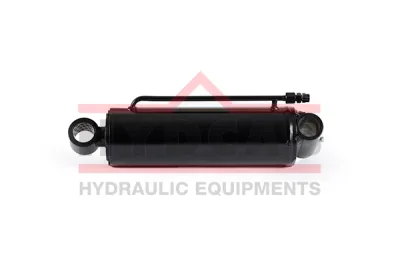
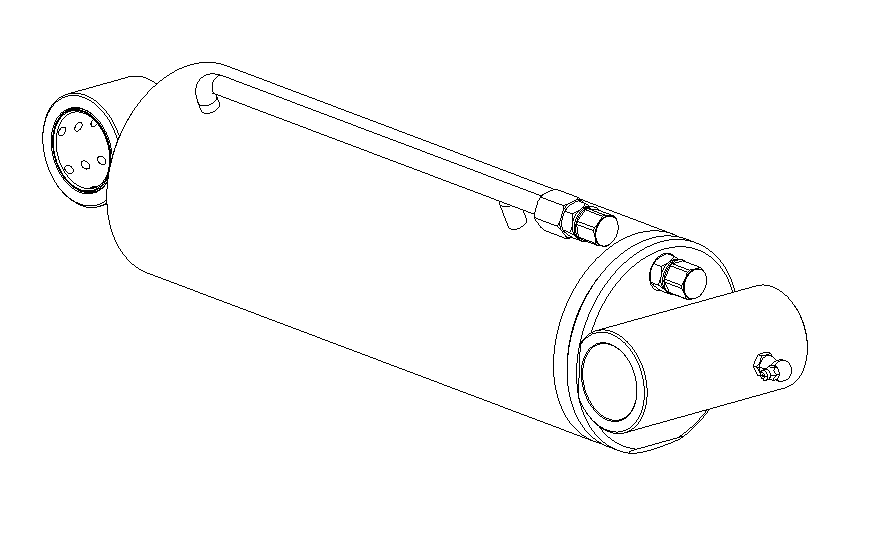
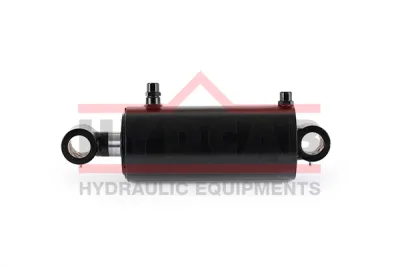
An axle lift cylinder is the hydraulic cylinder that raises and lowers the liftable axle on trucks equipped with one. Özteknik's HYDCAB catalogue currently lists 2 product codes in this category: one for Volvo and one for Scania vehicles. Both are in the axle lift cylinders catalogue.
What is an axle lift cylinder and what does it do?
Some multi-axle trucks have an auxiliary axle that does not need to be on the ground when the vehicle is empty or lightly loaded. This axle can be raised or lowered according to the load; when it is raised, tyre wear and rolling resistance are reduced and manoeuvring becomes easier. Depending on the vehicle design, lifting is done either by an air bellows or by a hydraulic cylinder. HYDCAB axle lift cylinders are of the hydraulic type.
One end of the cylinder is attached to the chassis and the other to the lifting mechanism on the axle side. When the driver gives the lift command from the cab, pressurised oil is sent to the cylinder and the cylinder raises the axle; on the lower command, the cylinder lets the axle return to the ground. Seals inside the cylinder prevent oil from escaping. Together with the valves in the system, this tightness is what keeps a raised axle from dropping by itself.
How to choose the right axle lift cylinder
In this category, selection is based on the OE number and vehicle data rather than a dimension table.
- OE number: Example OE numbers in the catalogue are 1698819, 20442045 and 20711112 for Volvo, and 1300048, 1378315 and 2083400 for Scania. Enter the number in the OE number search to see the matching code.
- Vehicle and axle configuration: Note the make, model and axle configuration of the vehicle and the position of the lift axle (in front of or behind the drive axle).
- Connection type: The end fittings and the position, orientation and thread type of the hydraulic port must match the old part.
- Stroke and length: Retracted length and stroke are vehicle-specific; if in doubt, measure the old part.
| What to check | Where to confirm it |
|---|---|
| OE number | Label on the old part, vehicle manufacturer's parts catalogue |
| Vehicle and axle configuration | Registration documents and chassis number (VIN) |
| Connection type | Comparison with the old part |
| Stroke and retracted length | Measurement of the old part |
Confirm the dimensions and connection type against the old part before ordering. As this category is limited to two codes, you are welcome to ask us with the OE number if your vehicle is not listed.
Failure symptoms
- The axle does not lift, lifts slowly or does not reach its full position.
- A raised axle drops down by itself after a while.
- Oil leaks at the piston rod or the port, with oily dirt around the cylinder.
- Rust, scratches or dents on the piston rod; a torn rod wiper.
- Jerky movement or knocking noises when lifting and lowering.
- Play in the end fittings or cracks in the mounting brackets.
Inspection and replacement
- First lower the axle and chock the vehicle on level ground.
- Inspect the cylinder, piston rod, rod wiper and hose connections for leaks and damage.
- Lift and lower the axle and watch from a safe distance that the cylinder moves smoothly and that the raised axle holds its position.
- If symptoms persist, also check the hydraulic pump, valves, hoses and oil level; the cylinder is not always the cause.
When replacing:
- Release system pressure before opening the hydraulic line and cap any open ports.
- Tighten all connections to the torque and procedure given in the vehicle manufacturer's service manual.
- After fitting, bleed the system according to the manufacturer's procedure, check the oil level and test operation by lifting and lowering the axle several times.
Safety: A raised axle is held by hydraulic pressure; when pressure is released or a line is disconnected, the axle can drop suddenly. Never go under a raised axle unless it is mechanically supported; chock the vehicle and secure it on suitable stands. Fitting must be carried out by qualified personnel.
Production and testing at Özteknik
HYDCAB cylinders are manufactured to OE quality by Özteknik in Kemalpaşa, İzmir. Tube forming, machining, welding, heat treatment, surface preparation, assembly, painting and testing are done in-house; details are on the Production and R&D page. The main tests in the HYDCAB programme that are relevant to axle lift cylinders are:
- SAE J1336 – Hydraulic cylinder leakage test
- SAE J1334 – Hydraulic cylinder integrity test
- SAE J1374 – Hydraulic cylinder rod seal endurance test procedure
- ISO 10100 – Hydraulic fluid power – Cylinders – Acceptance tests
- External leakage test
- Corrosion test
Özteknik's IATF 16949:2016 and ISO 9001:2015 certificates are on the quality and certificates page.
Vehicles covered
The catalogue lists two codes in this category: KS0166 and KS0171. One is for Volvo and the other for Scania vehicles; the product pages show which OE numbers each code corresponds to. There are currently no codes for other makes in this category; you can check the current status on the category page.
You can add the code you need to your quote list or write to us with the OE number via the contact page. OE numbers and brand names are given for comparison purposes only.
Frequently asked questions
How do I find an axle lift cylinder by OE number?
Enter the OE number from the old cylinder or from the vehicle manufacturer's parts catalogue in the site search; the matching HYDCAB code is listed. For example, you can search for Volvo 1698819 or Scania 1378315.
If a raised axle drops by itself, is the cylinder the cause?
It can be, since internal leakage in the cylinder can let the axle drop. However, the same symptom can also come from a valve, hose or the pump, so the whole system should be checked first.
Which vehicles are HYDCAB axle lift cylinders available for?
This category currently has two codes: one for Volvo and one for Scania vehicles. Fitment should always be confirmed by OE number.
What should be observed when replacing an axle lift cylinder?
Lower the axle, release system pressure and secure the vehicle with chocks and stands. After fitting, bleed the system, check the oil level and test operation by lifting and lowering the axle.
Also available in: العربية, Deutsch, Español, Français, Italiano, Русский, Türkçe